AI avatars in branding: How to create branded video ads that stand out
Scroll through any social feed, and you’ll see the same challenge play out again and again: brands have just a few seconds to capture attention, explain a message, and feel recognizable at the same time. Creating video ads that do all three consistently and at scale is hard, especially when campaigns need constant updates, new formats, and localized versions.
That’s why more brands are turning to AI avatars in branding and advertising. Used as on-screen brand representatives, AI avatars help companies produce recognizable, on-brand video ads faster and with more control. In this article, you’ll learn how AI avatars fit into modern branding, why brands are adopting them now, and how to create branded AI avatar video ads in a practical, repeatable way.
What are AI avatars in branding?
In branding, AI avatars are digital characters used as on-screen representatives in video ads. Instead of changing presenters from one campaign to another, brands use the same avatar to keep videos familiar and recognizable.
On screen, a branded AI avatar can:
- speak scripted messages
- present products and features
- deliver brand stories in a consistent format
This article covers AI avatars only in the context of video advertising, not chatbots, game characters, or experimental virtual influencers. The focus is on scripted avatars built to appear in branded video ads and communicate clear marketing messages.
AI avatars vs. traditional video presenters
Human presenters bring personality and emotion to video ads, but they also come with limits. Every update requires a new shoot, schedules need to align, and visual consistency can change from one video to the next. Over time, this can make it harder for a brand to keep a steady look and tone across campaigns.
AI avatars offer a different kind of control. The same avatar can appear in every ad, speak the same way, and follow brand guidelines without variation. Videos can be produced faster, changes are easier to apply, and costs stay more predictable as content scales. Most brands use AI avatars alongside human presenters, not instead of them, choosing avatars for repeatable, high-volume ads and people for moments that benefit from a personal, human touch.
Scripted avatars vs. interactive avatars
Scripted avatars are designed to deliver a fixed message. They follow a written script, appear in pre-recorded videos, and say the same thing every time the ad runs. This makes them a strong fit for video advertising, where clarity, timing, and message control matter.
Interactive avatars work differently. They respond to user input and are built for conversations, support flows, or live experiences. While useful in other contexts, they are not suited for video ads, which need a clear story and a consistent message. For this reason, branded video ads almost always rely on scripted avatars rather than interactive ones.
Why brands are using AI avatars for video advertising
Video advertising has changed quickly. Short-form formats now dominate feeds, campaigns run across more platforms, and audiences expect content that feels relevant to them. To keep up, brands need to produce many versions of the same message; shorter cuts, new languages, and localized offers, without slowing down their teams or losing brand consistency.
AI avatars help solve this challenge. They allow brands to create video ads faster, adapt messages for different markets, and keep a recognizable on-screen presence across campaigns. Instead of rebuilding each video from scratch, teams can update scripts, swap scenes, or adjust language while keeping the same branded look and tone.
Advantages of AI avatars for branding
One of the biggest advantages of AI avatars for branding is consistency. The same avatar delivers the message the same way in every video, helping brands stay recognizable across platforms and campaigns. This is especially useful for ads that run often or need frequent updates.
AI avatars also make iteration easier. Marketers can test new messages, offers, or formats without reshooting video. Localization becomes simpler as well, since scripts, languages, and accents can be adjusted while keeping the visual identity intact. As campaigns scale, production stays manageable, and brands keep full control over how their message is presented.
Where AI avatars fit in the marketing funnel
At the awareness stage, AI avatars are often used in short video ads that introduce a brand or highlight a key value in a clear, friendly way. The familiar face helps viewers recognize the brand as they scroll.
During consideration, avatars can explain product features or walk through benefits in simple explainer-style ads. For conversion-focused campaigns, they may deliver clear offers, promotions, or calls to action with a confident, consistent tone. In retention, AI avatars work well in update videos, onboarding ads, or announcements that keep existing customers engaged and informed.
How to create branded AI avatar videos with Powtoon
Creating an AI avatar video is much easier than it sounds. You don’t need design skills or experience with complex software to get started. What matters most is choosing a tool that’s built for everyday content creators and marketing teams, not video experts.
Platforms like Powtoon’s AI avatar generator are designed with simplicity in mind. They offer ready-made templates, AI avatars, and built-in editing tools, so you can focus on delivering your message instead of learning technical workflows. Once you’re inside the platform, the process follows a clear, natural flow, starting with structure, then adding your avatar, and finishing with visual polish.
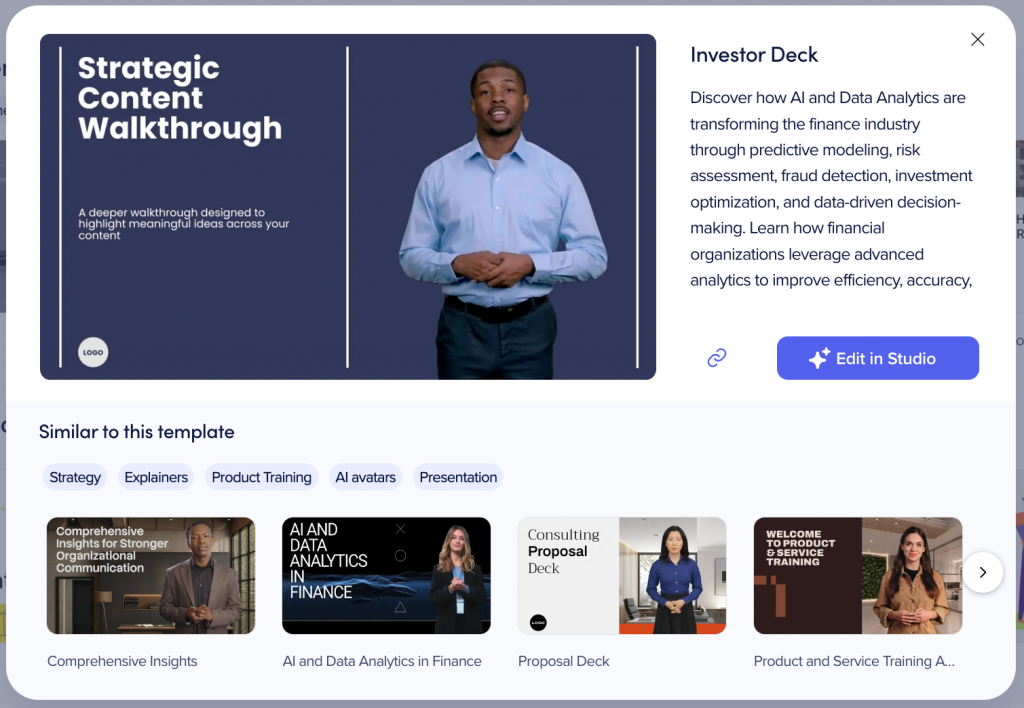
Step 1: Choose a template that fits your brand and campaign goal
Powtoon offers industry-specific templates and prebuilt scenes designed for marketing use. These templates give your video a clear structure from the start, which is especially helpful for ad campaigns that need to stay focused and on message.

When choosing a template, the key is to match it to your goal. Awareness campaigns work best with short, bold layouts, while product explanations and onboarding videos benefit from more structured scenes. Starting with a ready-made template helps keep branding consistent and speeds up production, since the layout and pacing are already in place.
Step 2: Customize your video in the Powtoon studio
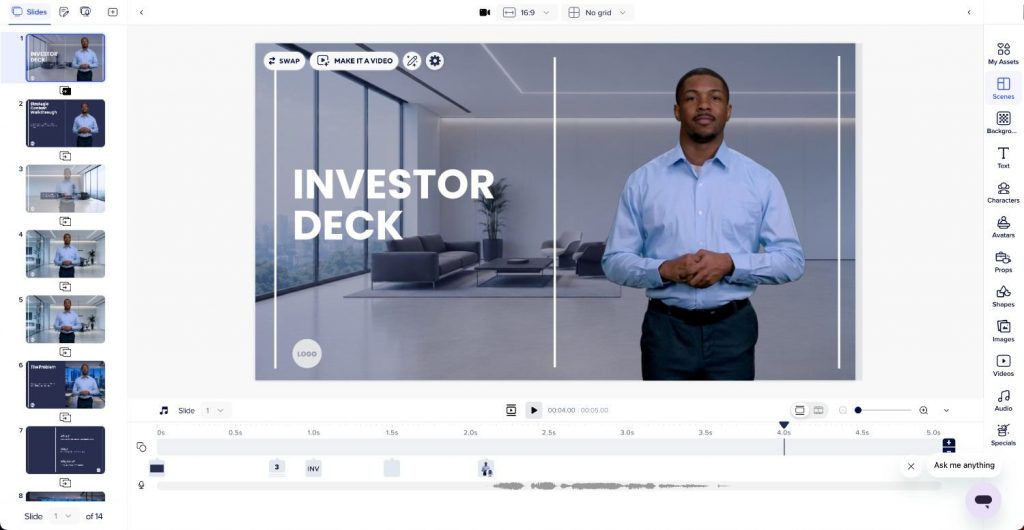
Once you’ve picked a template, the Powtoon studio is where the video comes together as a branded asset. Here, you can edit scenes, swap or adjust your avatar, add on-screen text, animations, and music, and align every detail with your brand guidelines. Editing scenes and text doesn’t use credits, so you can refine the video freely before exporting.
These choices matter more than they seem. An avatar that matches your brand guidelines, paired with the right tone and visuals, helps the video feel intentional and credible instead of generic.
Step 3: Export and share your video
Once your video is ready, Powtoon gives you several ways to get it out into the world. You can export directly to MP4, download it as an image or animated GIF, or push it straight to YouTube or MS Teams. For quick sharing, you can also generate a shareable video page or link without downloading a file first.
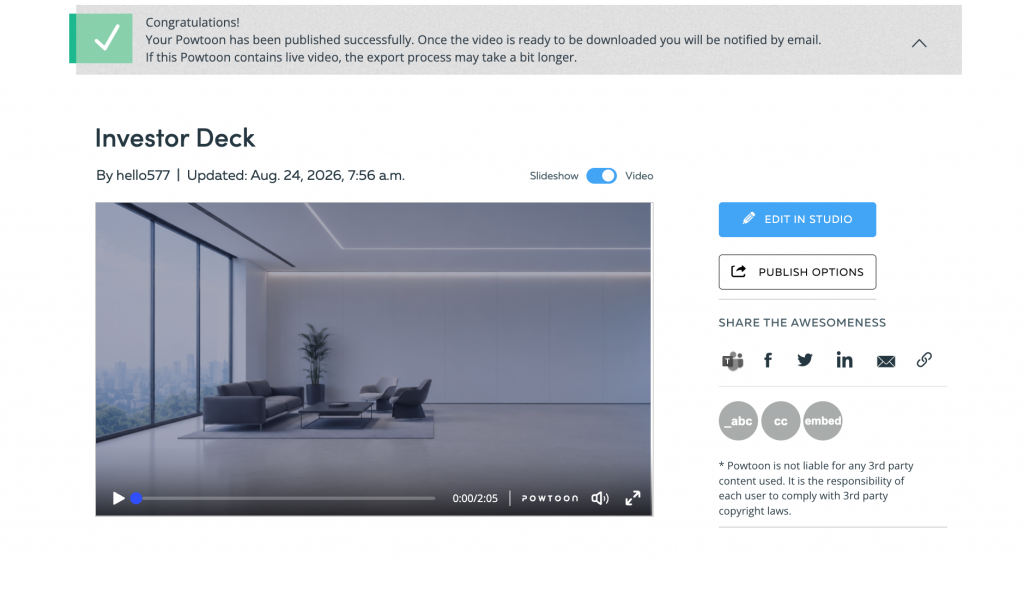
This is where the video becomes ready for real use, whether that’s an ad, a social post, or part of a larger investor or marketing deck.
Common mistakes brands make with AI avatars
AI avatars can strengthen branding, but only when they’re used with intention. Many issues come from treating avatars as a shortcut instead of a branded asset. Below are some of the most common mistakes that reduce impact in video ads.
Making the avatar feel generic or off-brand
An avatar can quickly lose value if it feels like a default choice. Weak scripts, mismatched visuals, or an unclear tone make the video feel disconnected from the brand. When the message sounds flat or the design doesn’t align with brand guidelines, viewers are less likely to trust what they see.
Strong branding starts with clear scripting and thoughtful design choices. When the avatar reflects the brand’s voice, style, and audience, it supports credibility instead of hurting it.
Overusing realism and triggering the uncanny valley
Trying to make avatars look too real can work against engagement. Highly realistic faces and movements often feel unnatural on screen, which can distract viewers or make them uncomfortable. In advertising, this breaks focus and reduces trust.
Simpler, stylized avatars tend to perform better in video ads. They feel intentional, are easier to watch, and keep attention on the message rather than the technology.
Failing to be transparent with audiences
Some brands avoid mentioning that an AI avatar is being used, hoping viewers won’t notice. This can create confusion or mistrust if audiences feel misled. Transparency helps set the right expectations and protects brand credibility.
Being clear about the use of AI doesn’t weaken the message. In many cases, it shows confidence and reinforces trust, especially when the avatar is clearly positioned as a brand representative.
Examples of AI avatars for branding in video ads
Brands across industries use AI avatars in different ways, but the goal is usually the same: deliver a clear message with a recognizable voice and look.
Ecommerce: Using digital avatars to support brand storytelling
H&M created AI-generated “digital twins” of 30 real models and used them in place of traditional photoshoots for a denim campaign. Each avatar was built from real photos of a specific model, who kept ownership of their digital likeness and was compensated for its use. The campaign images were clearly labeled as AI-generated, showing how a brand can scale product-focused video and photo content while staying transparent with its audience.
Education: AI avatars for flexible and engaging learning videos
Akool Inc shares a real example of a music teacher using an AI avatar in his online classes. The avatar delivers parts of the lesson on screen, helping the teacher update content quickly and keep students engaged. This approach shows how education brands can use AI avatars to create clear, flexible learning videos without constant re-recording.
Fintech: AI avatars for consistent brand communication
Klarna used an AI version of its CEO to present a quarterly update in English, Swedish, and German. The avatar makes it easier to share the same message across markets while keeping Klarna’s tone familiar and human. It’s a good example of how fintech brands can use AI avatars to communicate clearly at scale.
Where AI avatars are taking brand-led video advertising
AI avatars are moving beyond one-off ads and becoming part of how brands manage video at scale. As personalization improves, the same avatar can deliver tailored messages based on audience segments, platforms, or regions, without changing the core brand identity.
Localization is also becoming easier. Brands can adapt language, tone, and offers for different markets while keeping a familiar on-screen presence. At the same time, AI avatar videos are starting to connect more closely with performance marketing workflows, making it simpler to test variations, track results, and refine messaging over time.
Not every brand wants a realistic, human presenter, though. For brands that prefer a stylized or animated look, Powtoon’s animated character creator offers a separate path to a consistent, on-brand presenter, built as a custom character rather than an AI avatar.
Taken together, these shifts point to a future where branded video ads are faster to produce, easier to adapt, and more consistent, without losing the human feel audiences still expect from brands.
FAQ
What are AI avatars in branding, and how do brands use them in video ads?
AI avatars are digital presenters used in video ads to represent a brand on screen. Brands use them to explain products, share updates, or highlight offers clearly and consistently. Using the same avatar across videos helps keep the brand easy to recognize while speeding up content creation.
Are AI avatars effective for brand awareness and performance marketing?
AI avatars work well for awareness by giving brands a familiar face across platforms. In performance campaigns, they make it easier to update messages, test variations, and produce more ads without starting over each time. This helps teams move faster while staying consistent.
How do you create branded AI avatars that stay on brand?
A strong branded avatar follows the same rules as any other brand asset. The voice, look, and tone should match existing brand guidelines. Starting with clear scripts and approved visuals helps the avatar feel natural and aligned with the brand.
What are the advantages of AI avatars for branding compared to human presenters?
AI avatars are easier to reuse and update across many videos. They help brands keep the same on-screen presence while adjusting messages for different campaigns. Human presenters still matter, but avatars are useful for repeatable, high-volume ads.
Can AI avatars be used across different ad platforms and regions?
Yes, AI avatars are designed to work across platforms and markets. Brands can keep the same avatar while changing languages, accents, or messaging to fit different regions. This makes it easier to scale video ads without losing brand identity.

Ilya Spitalnik
Latest posts by Ilya Spitalnik (see all)
- AI avatars in branding: How to create branded video ads that stand out - September 3, 2026
- How to make an AI video tutorial - September 3, 2026
- Powtoon’s Unified AI Video Platform: A New Era for Enterprise Visual Communication - December 17, 2025
- How AI Bridges Theory to Practice in Learning, Development and Communications - October 23, 2025